

Wayfinding and Directional Signage in Dubai
Falcon Advertising designs and produces wayfinding and directional signage in Dubai — directory boards, floor identification, directional arrows, room and department signs. The Dubai Universal Design Code requires signs at key decision points, positioned to avoid shade and glare and to stay visible to a wheelchair user or a child.
- Price
- Get your quote today
- Turnaround
- Confirmed with your quote
- Artwork
- Included
- Languages
- Arabic & English
- Delivery
- Dubai and across the UAE
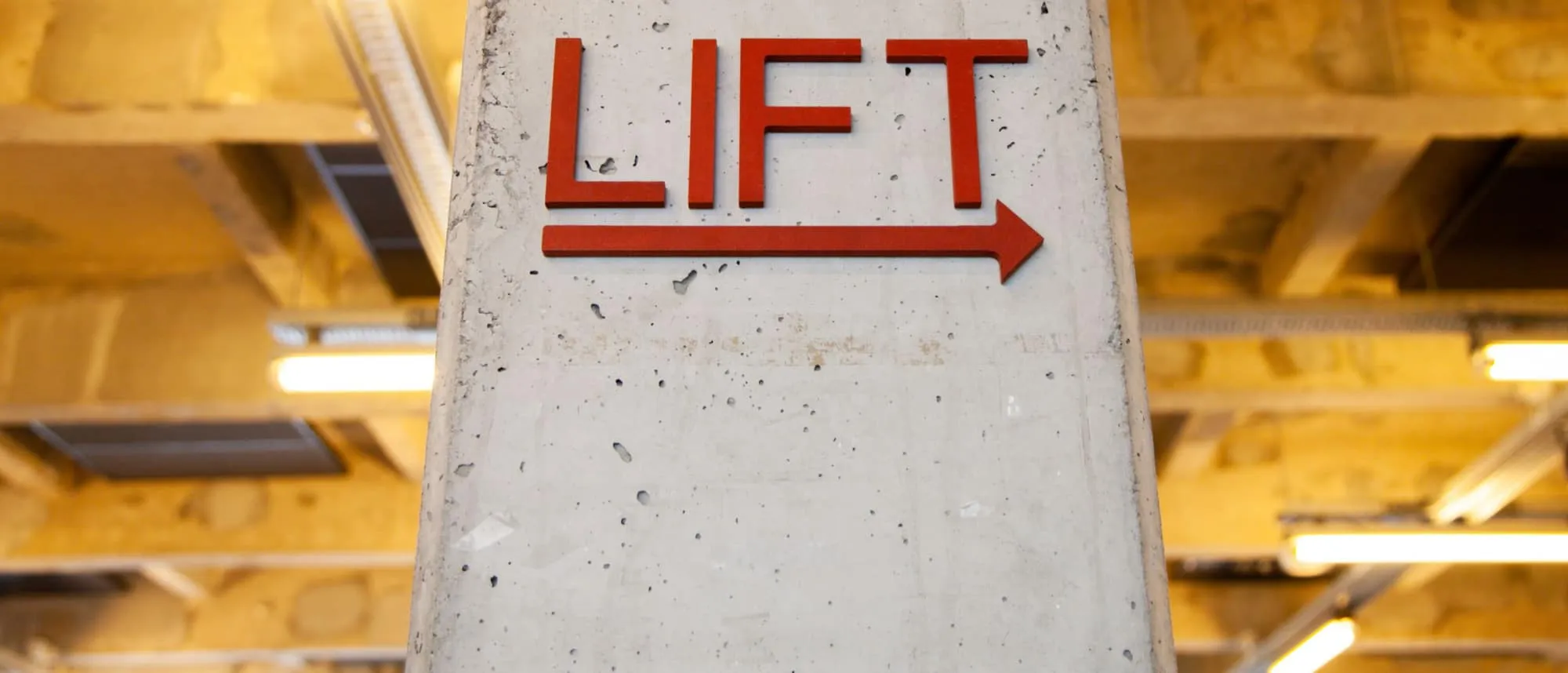
Specifications
What you can order
If what you need is not listed, ask — this is what we make most often, not a limit.
| Sign types | Directory and tenant boards · floor identification · directional arrows · room and department signs · overhead and projecting blades · external site maps |
|---|---|
| Placement | At key decision points — every junction, lift lobby and entrance where somebody has to choose. Positioned to avoid shade and glare. |
| Height | In high pedestrian traffic areas, signs sit well above head level. In all cases the sign must stay visible to a wheelchair user or a child. |
| Materials | Aluminium composite · acrylic on standoffs · powder-coated steel for overhead blades · vinyl on glass for door and lobby graphics |
| Changeable panels | Slide-in or magnetic inserts for directories where tenants and departments change. Fixed panels where they do not. |
| Languages | Arabic and English on the same sign, with the Arabic set right-to-left as proper joined letterforms. |
| Accessibility | Braille and tactile versions are a separate build with their own code requirements — see the Braille and tactile signage page. |
Build your specification
Choose what you need and send it over. Your selection arrives with the enquiry, so the quote comes back against the exact specification rather than a guess at it.
Product examples
Wayfinding & directional signage
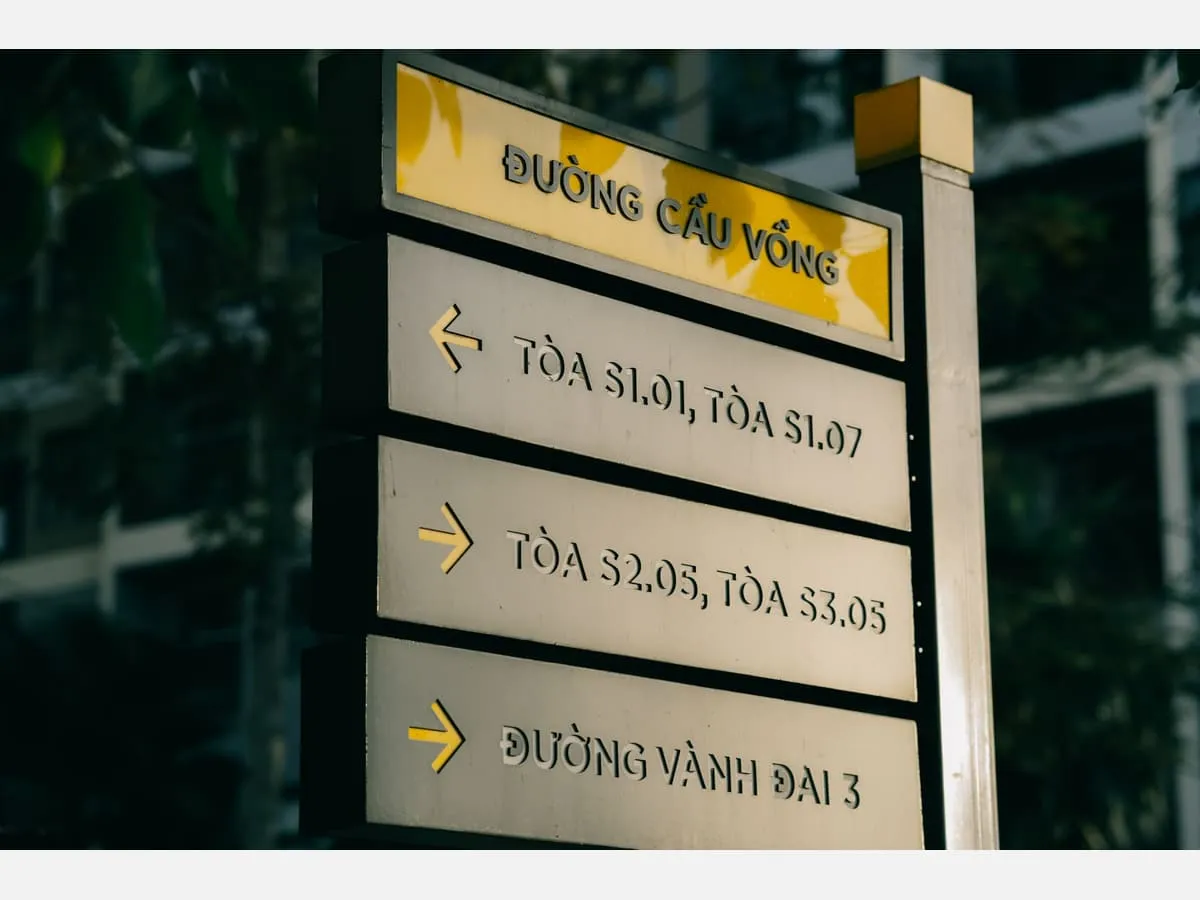
Directory board with changeable bars 
Destination sign at a decision point 
Fingerpost, for external and campus routes
Product photography from our production partner. The artwork shown is their sample design, not work produced for a Falcon client — our own projects are in the portfolio.
What's included
In the price you are quoted
- A sign schedule — every sign, its position, its message and its size, before anything is made
- Arabic typeset properly, not pasted in as an image
- Consistent typeface, arrow style and colour across the whole set
- A digital proof of every panel
- Delivery across Dubai
Wayfinding fails as a set, not as a sign
Almost every bad wayfinding scheme is made of individually acceptable signs. The typeface changes between floors. One sign says Level 1, the next says Ground. Arrows point at 45° on one panel and horizontally on another. Nothing is wrong and the building is still confusing.
That is why the first deliverable here is a sign schedule rather than a sign — a list of every panel, where it goes, exactly what it says and how big it is. Contradictions are obvious on a schedule and invisible once things are installed on four different floors.
Signs belong at decisions, not at intervals
The instinct is to space signs evenly along a corridor. The code and common sense both say otherwise: a sign belongs where somebody has to choose — a junction, a lift lobby, a stair head, an entrance.
A corridor with no branches needs nothing. A single junction with four options may need more than one. Walk the route as a stranger would and mark every point where you would hesitate; that is the schedule.
The Dubai Universal Design Code also requires that signs avoid shade and glare, which quietly rules out a lot of walls that seemed ideal — anything facing a glazed entrance at the wrong hour, anything under a spotlight.
Two heights, for two readers
In busy areas signs sit above head level so a crowd does not hide them. But the code also requires the sign to remain visible to a wheelchair user or a child, and those two requirements pull in opposite directions.
The practical answer is usually both: an overhead sign readable down the length of a corridor, and a lower panel at the decision point itself. Budgeting for one and discovering you need two is a common way for a scheme to end up compromised.
Decide about changeable panels before you order
A directory listing tenants or departments in a building with any turnover will be wrong within a year. Slide-in or magnetic inserts cost more up front and let you change one line without remaking the board.
A fixed, engraved directory looks better and costs less on day one. It then costs a new board every time somebody moves. Which is right depends entirely on how stable the occupancy is — and that is a question worth answering before the board is specified rather than after.
Questions
Wayfinding & directional signage: Common questions
Where do wayfinding signs actually need to go?
At decision points — anywhere a person has to choose a direction. That means junctions, lift lobbies, stair heads and entrances, not evenly spaced along a corridor. The Dubai Universal Design Code puts it the same way, and adds that signs should be positioned to avoid shade and glare, which rules out a lot of otherwise obvious walls.
How high should they be mounted?
In areas with high pedestrian traffic, signs sit well above head level so they are not blocked by people. But the code also requires that the sign stays visible to a wheelchair user or a child, which is the constraint people forget. In practice that often means two signs — an overhead one for distance and a lower one at the decision point.
Can we change the names later?
If you specify it now, yes. Directory boards with slide-in or magnetic inserts let you change a tenant or a department without remaking the board. For a building with any turnover, that decision is worth more than the material. A fixed engraved directory looks better and costs less up front, then costs more every time somebody moves.
Do these need Braille?
Often, and it depends on the building type and the authority. Braille and tactile versions are a different build with their own dimensioned requirements under the Dubai Universal Design Code, so they are quoted separately rather than added as an option. If accessibility signage is in scope, raise it before the sign schedule is fixed, not after.
Why does a sign schedule matter?
Because wayfinding fails as a set, not as individual signs. The usual failure is signs that are each fine but inconsistent — three typefaces, two arrow styles, a floor called Level 1 on one sign and Ground on another. A schedule lists every sign, its position and its exact wording before anything is made, which is when those contradictions are cheap to find.
Related
Often ordered together
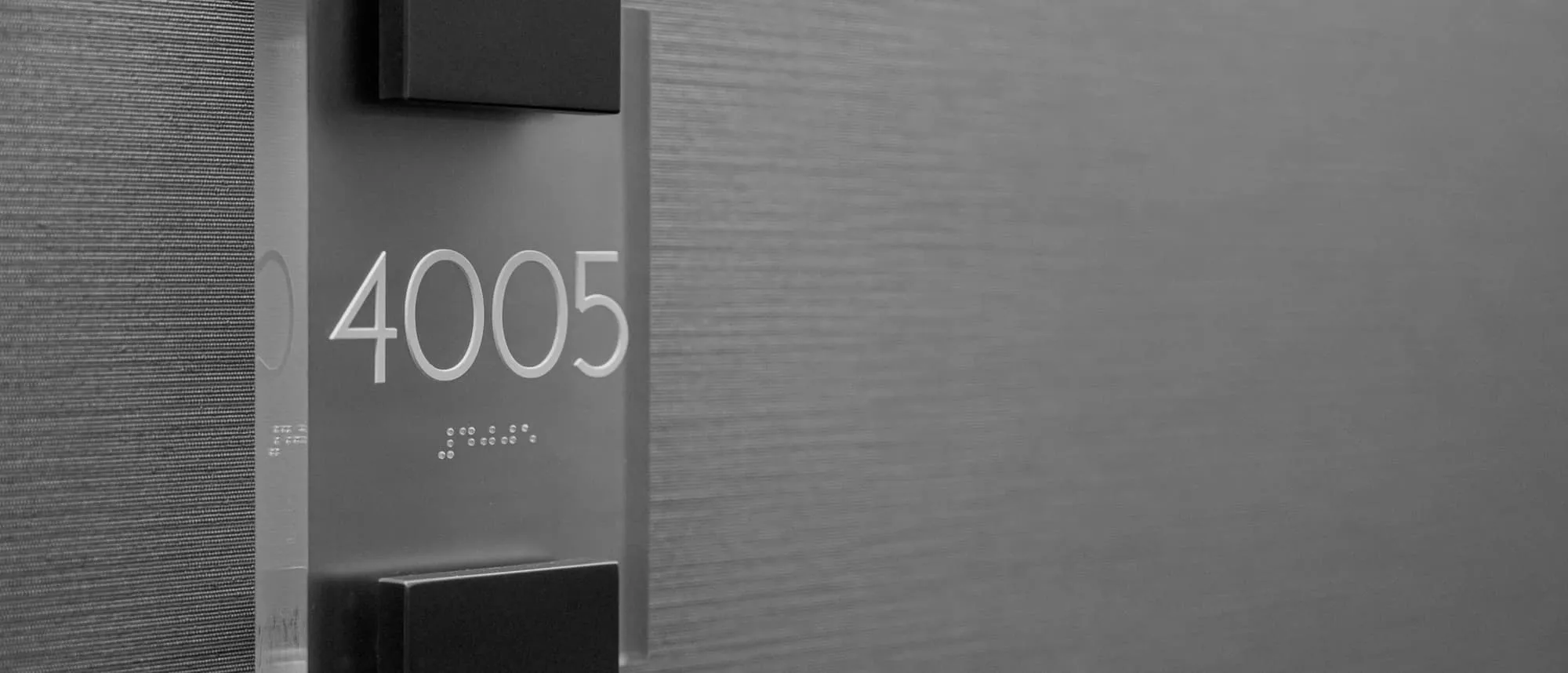
Braille & tactile signage
Room numbers, wayfinding and tactile maps built to the Dubai Universal Design Code. Grade 1 Braille.
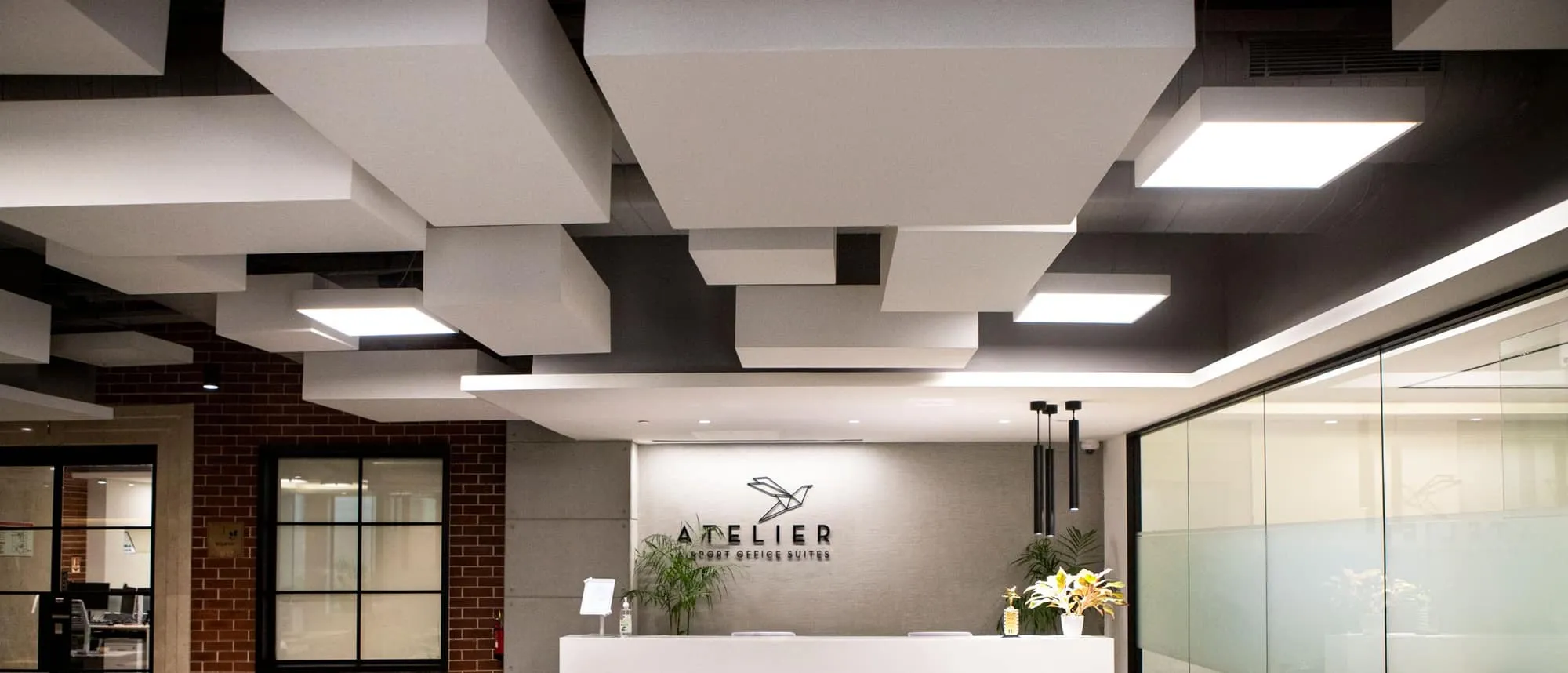
Reception & lobby signage
Logo walls, dimensional lettering and backlit feature panels for the wall behind your front desk.
Shopfront & office signage
Fascia, projecting signs, door and window graphics — the exterior set, consistent.
Get a price for this
Send your specification, or a photo of what you use now. You will get a written price with the exact specification listed against it.