

Internal Signage in Dubai
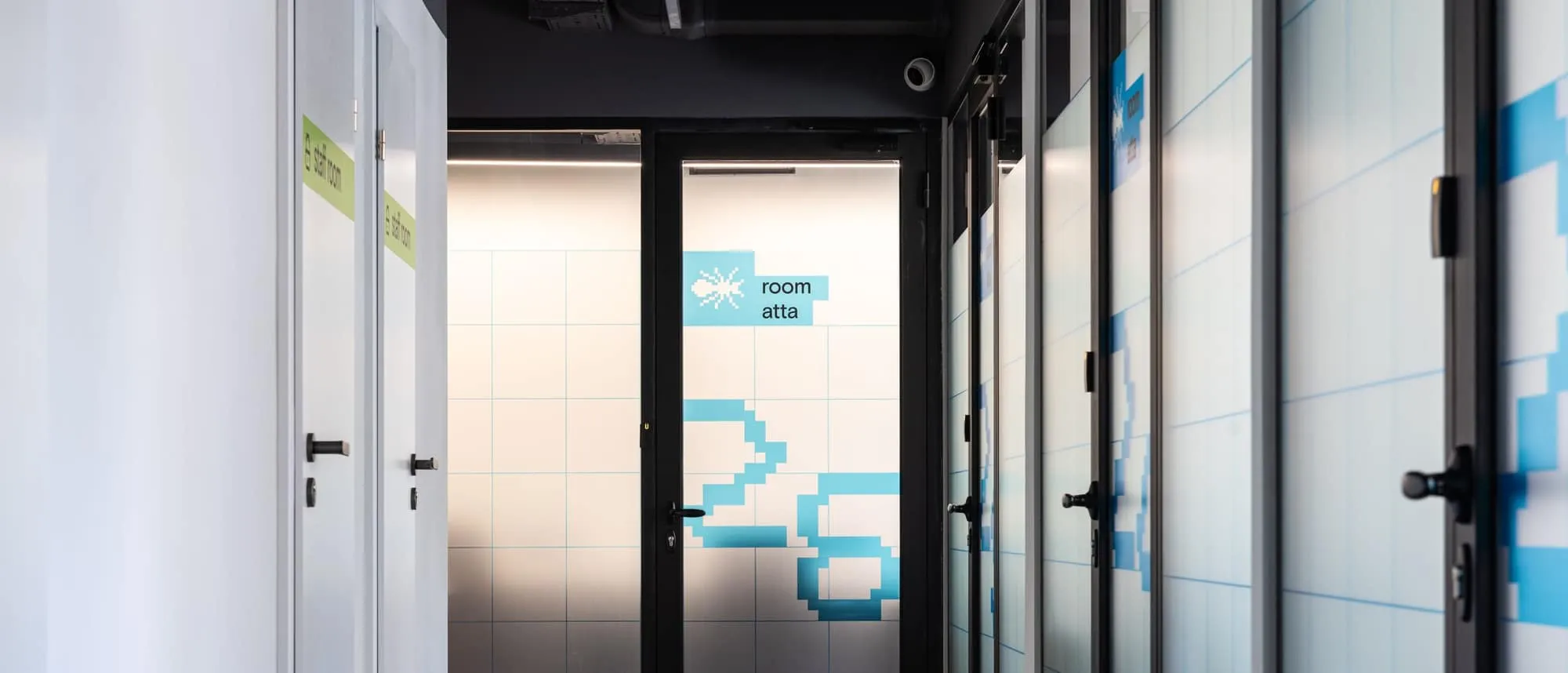
Internal signage in Dubai covers everything inside the door — reception logo walls, wayfinding and directories, room and department signs, nameplates, and Braille and tactile signage. It generally sits outside the advertising permit regime, but accessibility requirements under the Dubai Universal Design Code do apply, and they are usually discovered late.
- Price
- Get your quote today
- Turnaround
- Confirmed with your quote
- Artwork
- Included
- Languages
- Arabic & English
- Delivery
- Dubai and across the UAE
Specifications
What you can order
If what you need is not listed, ask — this is what we make most often, not a limit.
| Types | Reception logo walls · wayfinding and directories · room and department signs · nameplates · Braille and tactile · safety and statutory |
|---|---|
| Permit | Generally not required. Permits cover signage visible from outside, so interior signs within your own premises normally sit outside that regime. |
| Accessibility | The Dubai Universal Design Code applies. Braille position and tactile map dimensions are specified; raise accessibility before the sign schedule is fixed. |
| Materials | Acrylic on standoffs · brushed or mirror stainless · powder-coated aluminium · engraving acrylic · vinyl on glass |
| Planning | A sign schedule — every sign, position, message and size — before anything is made. Interior signage fails as a set, not as a sign. |
| Languages | Arabic and English, with the Arabic set right-to-left as proper joined letterforms. |
Build your specification
Choose what you need and send it over. Your selection arrives with the enquiry, so the quote comes back against the exact specification rather than a guess at it.
Product examples
Internal signage
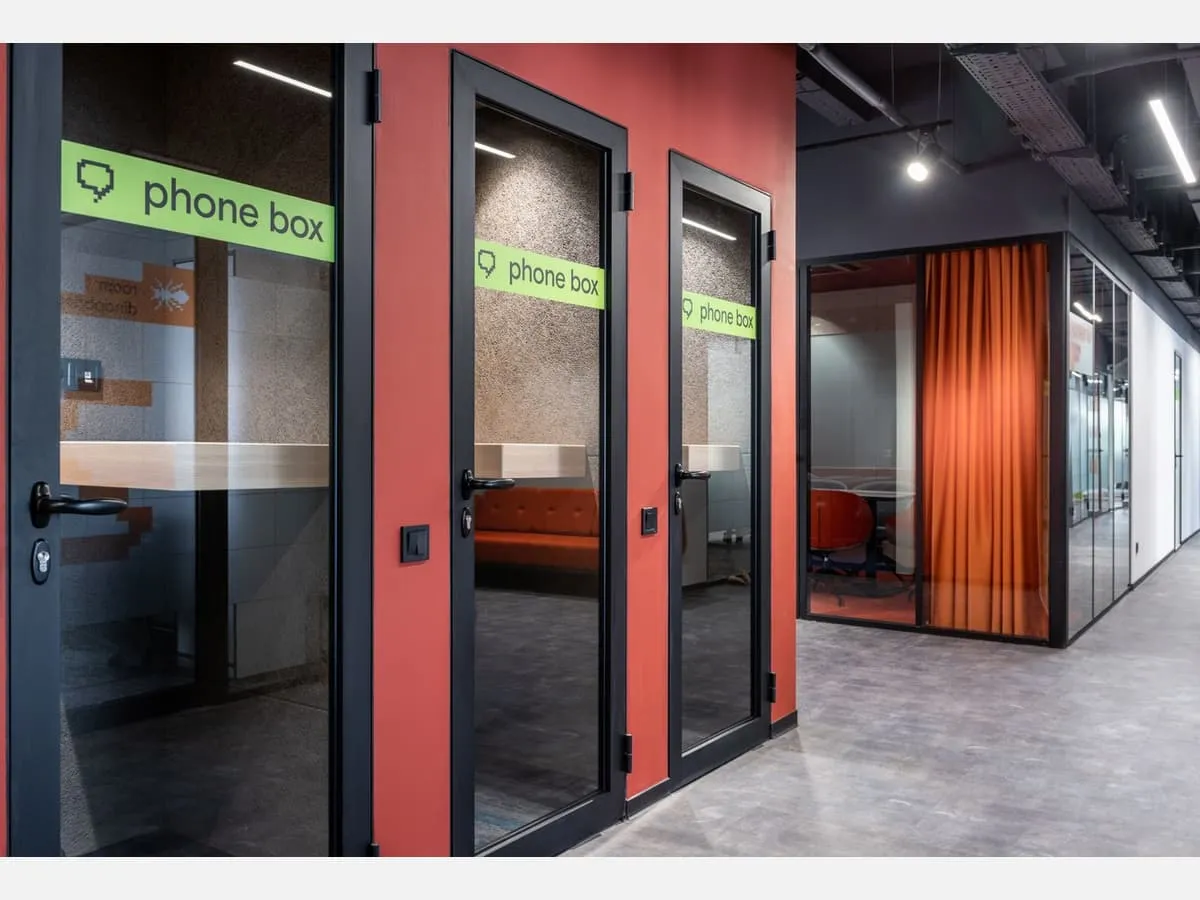
Room and facility labels 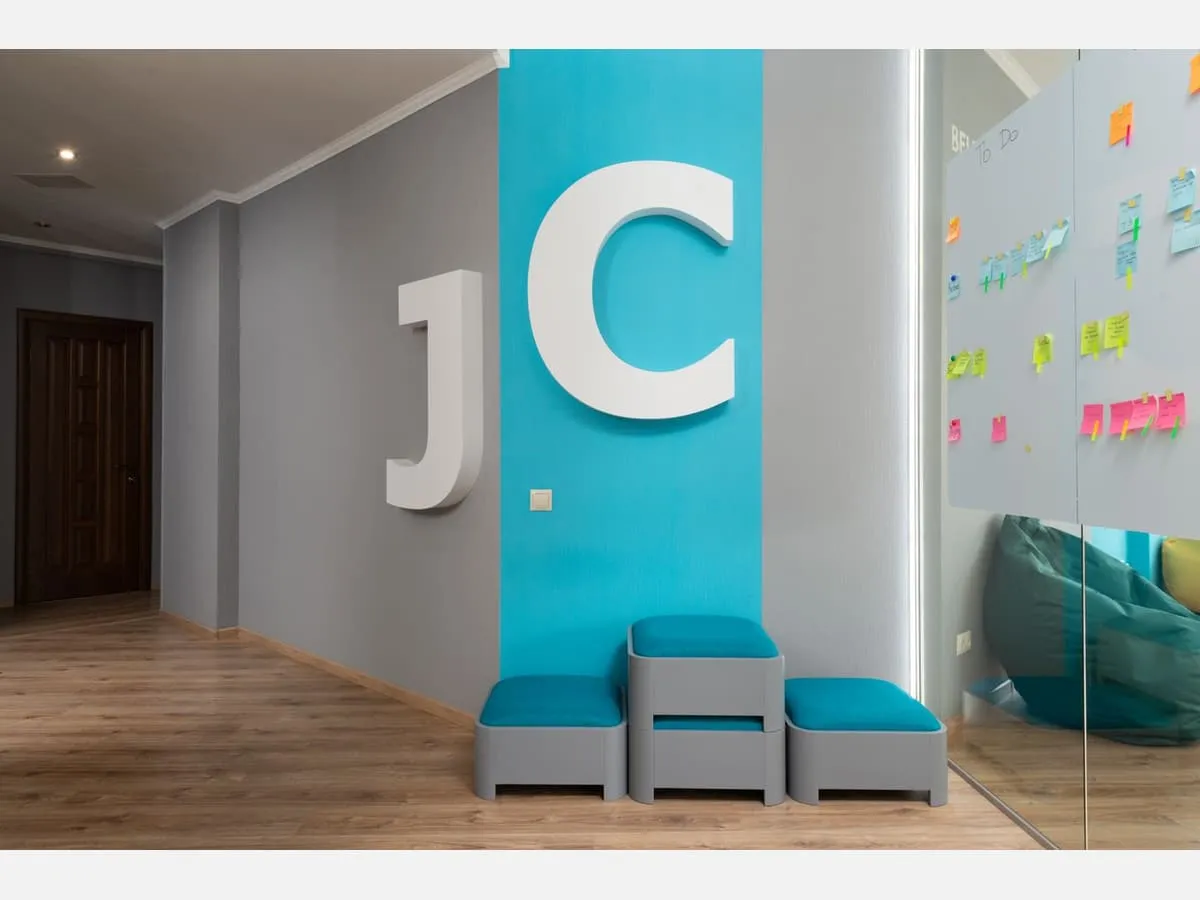
Dimensional wall lettering
Product photography from our production partner. The artwork shown is their sample design, not work produced for a Falcon client — our own projects are in the portfolio.
What's included
In the price you are quoted
- A sign schedule covering the whole interior rather than one sign at a time
- Consistent typeface, arrow style and colour across every panel
- Arabic typeset properly, not pasted in as an image
- A digital proof of every panel
- Delivery across Dubai
Inside the door, the rules change
The permit regime that governs shopfronts covers signage visible from outside. Interior signage within your own premises generally sits outside it, which is why an internal scheme moves faster than an external one.
The exception is glass. A sign placed inside your unit but read from a mall walkway can be treated as external, and that is worth asking about before it is made rather than after.
What does apply inside is accessibility. The Dubai Universal Design Code specifies Braille position, tactile map dimensions and where wayfinding signs belong. Whether it reaches your building depends on its type and use — a question for your consultant, not your printer.
It fails as a set
Almost every poor interior scheme is made of individually acceptable signs. The typeface changes between floors. One sign says Level 1, the next says Ground. Arrows tilt on one panel and sit square on another.
So the first deliverable is a sign schedule — every panel, its position, its exact wording and its size — rather than a sign. Contradictions are obvious on a schedule and invisible once things are installed across three floors by two different people on different days.
Raise it during the fit-out, not at sign-off
Two things in an interior scheme are cheap while the walls are open and expensive afterwards.
Lighting. Halo-lit lettering behind a reception desk needs a cable in the wall. Trivial during fit-out, disruptive after, and sometimes refused by the building.
Accessibility. The contrast requirement constrains the colour palette, and the Braille band needs width in the layout. Discovering both at sign-off means redesigning signs that were already approved.
Neither is difficult if the question is asked early. Both are awkward if it is not.
Where to go next
- Reception & lobby signage — logo walls and dimensional lettering
- Wayfinding & directional signage — directories, arrows, room signs
- Engraved nameplates — door plates and desk nameplates
- Braille & tactile signage — accessibility signage to the code
- Safety signage — warning, prohibition and emergency
- External signage — everything outside the door
Questions
Internal signage: Common questions
Does internal signage need a permit in Dubai?
Generally not. The advertising permit regime covers signage visible from outside the premises, so interior signs within your own unit normally sit outside it. The exception worth checking is anything visible through glass from a mall walkway or the street — that can be treated as external. Ask before you order rather than after.
What rules do apply inside, then?
Accessibility. The Dubai Universal Design Code sets requirements for Braille position, tactile maps and where wayfinding signs are placed — at decision points, avoiding shade and glare, and visible to a wheelchair user or a child. Whether it applies to your building depends on its type and use, which is a question for your consultant or the reviewing authority.
Why order it as a set rather than sign by sign?
Because interior signage fails as a set. The usual pattern is individually acceptable signs that disagree with each other — three typefaces, two arrow styles, a floor called Level 1 on one sign and Ground on another. A schedule listing every panel and its exact wording catches that while it is still cheap to fix.
When should we be thinking about this during a fit-out?
Earlier than most people do. Halo lighting behind a reception logo needs a power feed in the wall, which is trivial while the fit-out is open and disruptive afterwards. Accessibility signage constrains the colour palette through its contrast requirement. Both are straightforward if known at design stage and awkward if discovered at sign-off.
Can internal signage match the shopfront?
It should, and doing both together is usually cheaper and more consistent — one design pass and one installation visit rather than several. The most common inconsistency we see is a fascia in one typeface and interior signs in another, which nobody plans and everybody notices.
Related
Often ordered together
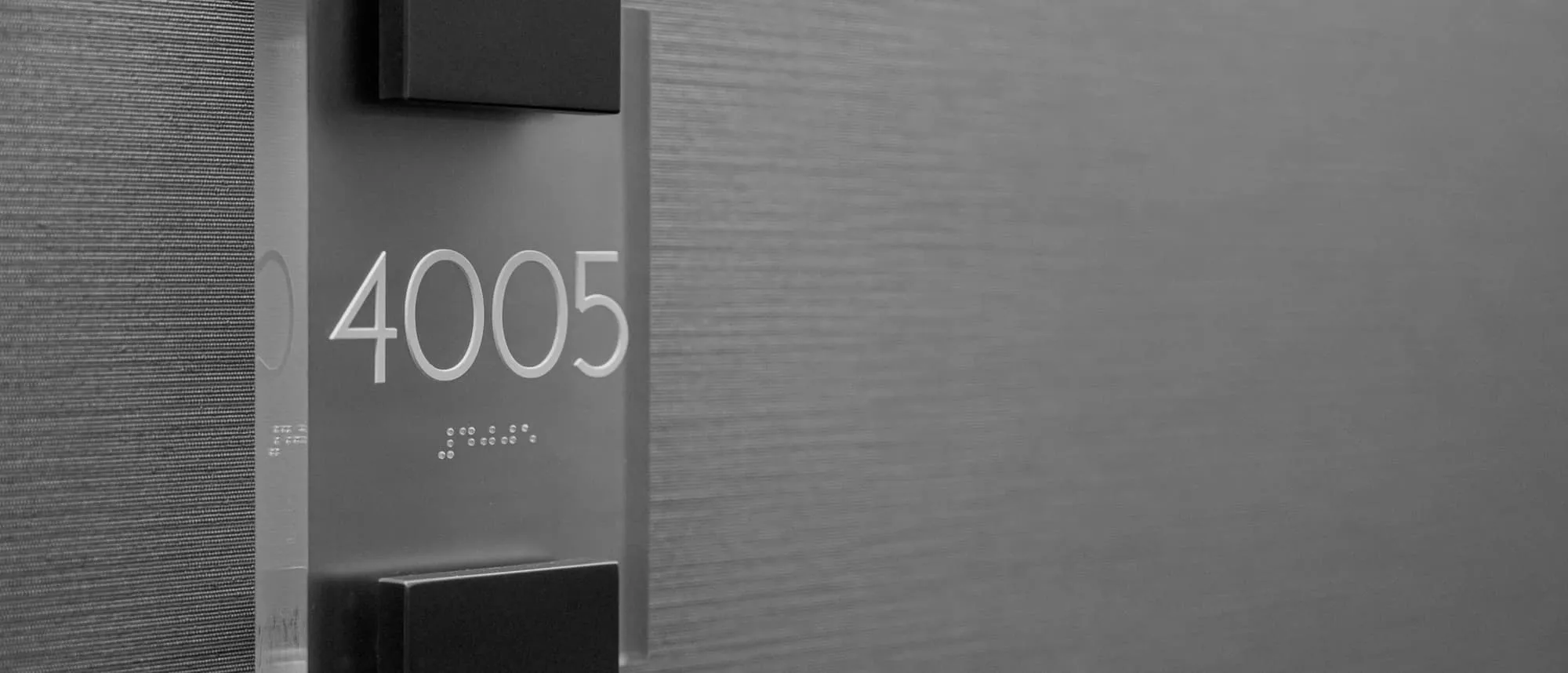
Braille & tactile signage
Room numbers, wayfinding and tactile maps built to the Dubai Universal Design Code. Grade 1 Braille.
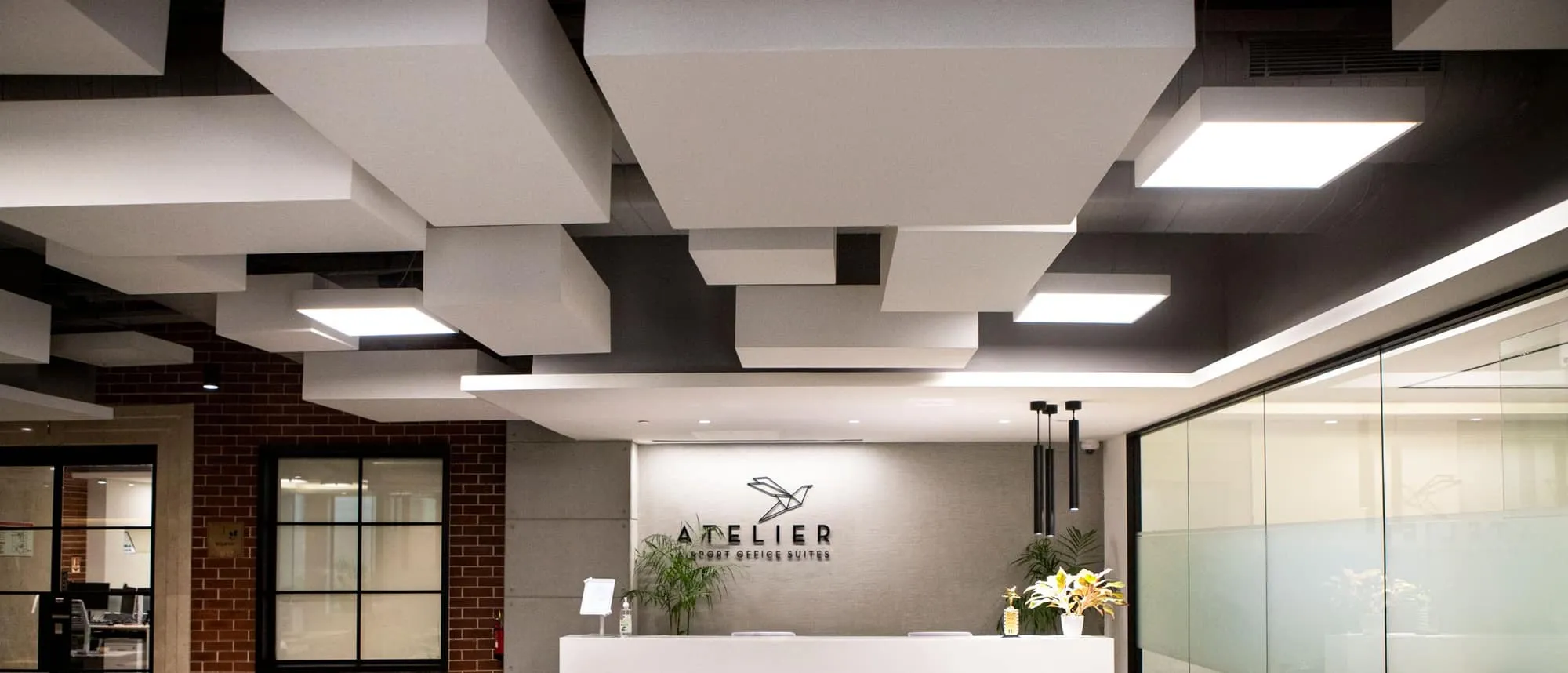
Reception & lobby signage
Logo walls, dimensional lettering and backlit feature panels for the wall behind your front desk.
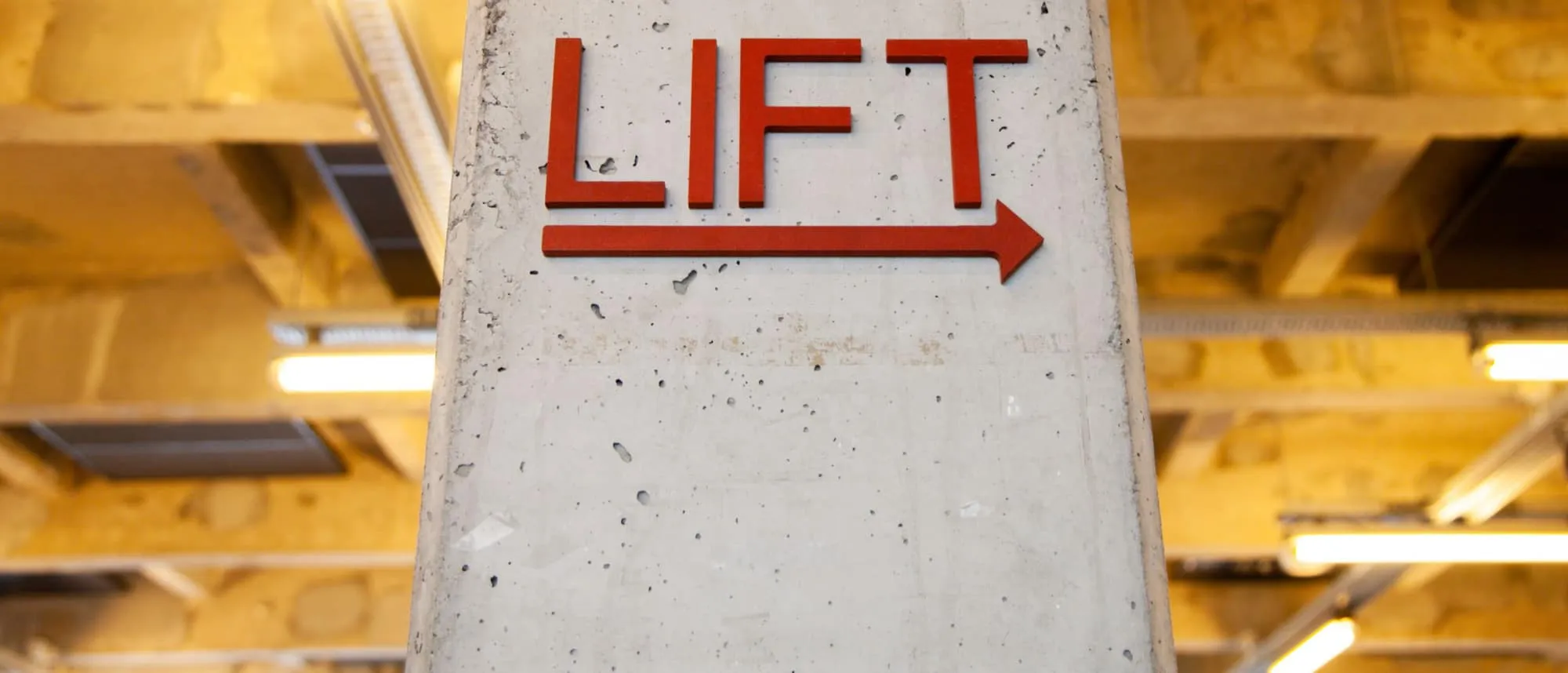
Wayfinding & directional signage
Directory boards, floor identification, directional arrows and room signs — bilingual, planned as a set.
Get a price for this
Send your specification, or a photo of what you use now. You will get a written price with the exact specification listed against it.